Some unexpected little museums don’t work out, but we’ve been lucky over the years in happening upon some fascinating nooks and crannies. This post is about two somewhat unlikely tourist attractions, and one must-see for everyone.
First, the Almgren Silk Weaving Mill. During the mid-1800s, this factory contributed to Stockholm’s growing industrialization, employing over 250 workers at its peak, mostly women. Today it’s a funky museum with exhibits on the making of silk thread and weaving of silk fabrics. A weaver/artist was there to explain and illustrate: 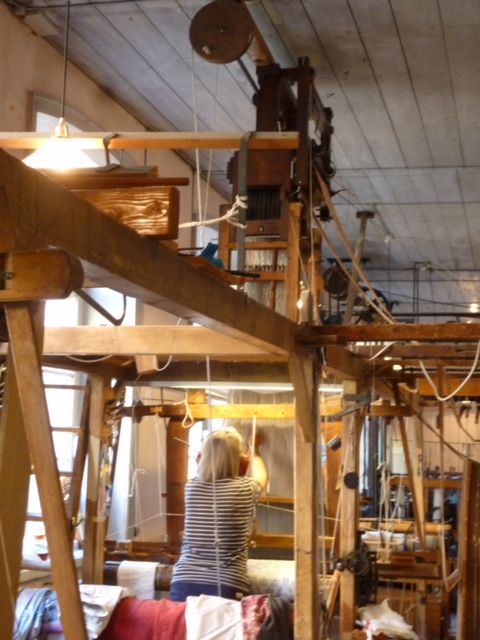
and I also snapped her up high on the loom, fixing something: 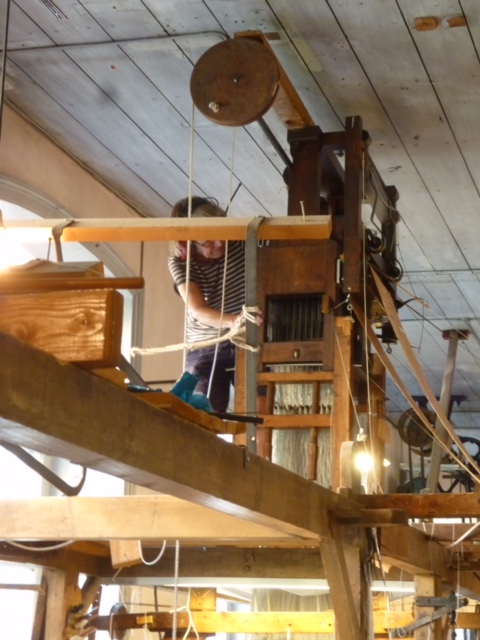
One really fun thing was an incident of industrial espionage. The main guy at the mill went to France, learned about the use of punched cards (the Jacquard loom process), stole a few pieces of equipment, and brought them back. So our artist/weaver lady may have been fixing the mechanism that reads the punched cards, by which the intricacies of the pattern are produced on the loom. (The cards are chained together and feed in from the right side of the photo.)
Since I used punch cards and punched paper tape in my work during the previous century, I was happy to see genuine Jacquard cards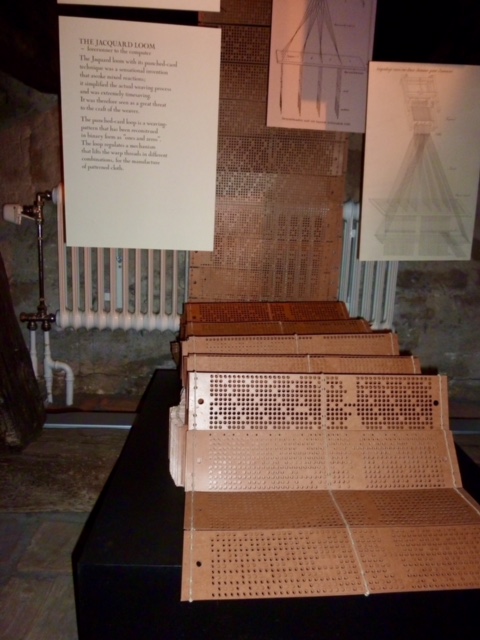 that were the real thing back in 1864.
The exhibits also explained where silk comes from, namely the cocoons of silkworm larvae, as shown here: 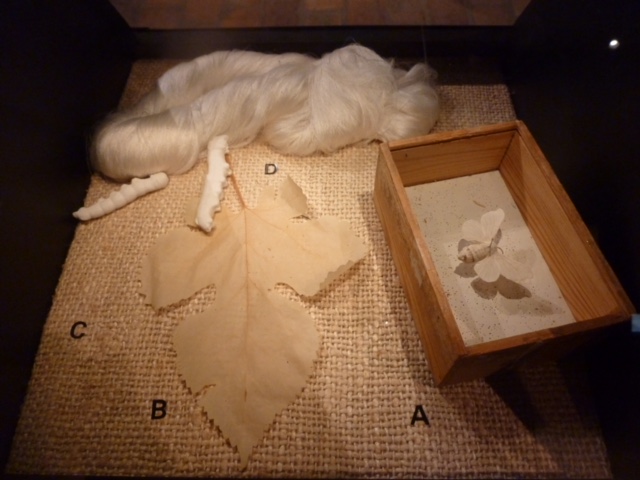 and here:
 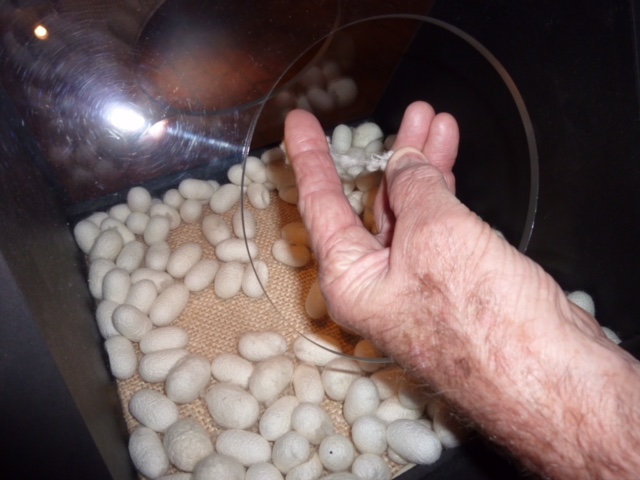 but we forgot to ask how the thread is spun and dyed. The museum has impressive displays of fabrics and garments produced by the Almgren mill, but the mechanics were the most interesting to us.
Next, a museum that is probably seen by every visitor to Stockholm: the current home of the Vasa. It was a huge, stunningly decorated, sailing warship, with a crew of about 450 men and over 50 cannons It was launched here in 1628. 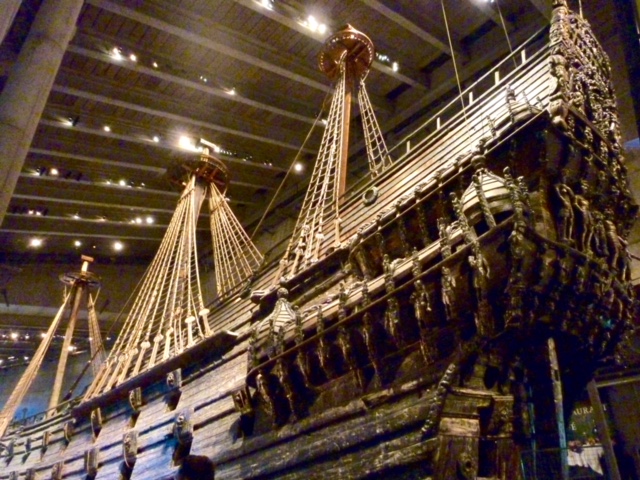
Oh, wait. The Vasa sank about 40 minutes into her maiden voyage, when a gust of wind caught the sails and she keeled over. She remained sunk in the mud until 1961, when recovery efforts finally succeeded. The museum opened in 1990, with over 90% original material. The ship is HUGE, which is pretty much why it sank: way too little ballast below the waterline, competing with massive sails and all those cannons, making it way too top-heavy. (The commission inquiring into the failure assigned no blame, but our guidebook says the king kept pressing the designer for a taller, narrower ship. Another lack of leadership?)
It was intended to be a fearsome warship, so when the cannon ports were opened, the enemy was supposed to be frightened by lions: 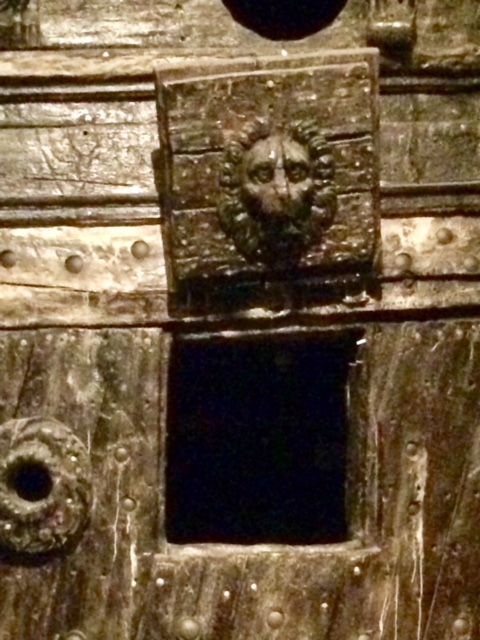 but it was also highly decorated and painted in bright colors. I liked some of the figures that graced the stern (and are now mounted on a wall):
 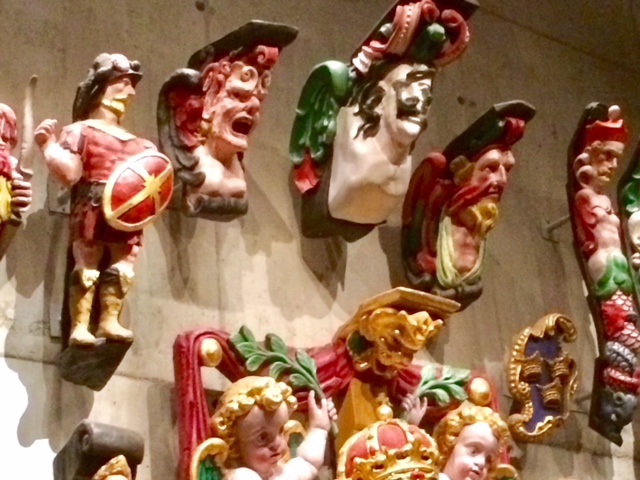 and I’m very impressed by both the original shipbuilding work and the mighty job of raising and refurbishing the Vasa.
Finally, more history about the Postal Service than you would ever expect, with a few topics that I never knew or thought about. This is a good museum for kids, with a number of activities directly for them, and lots of colorful displays like this: 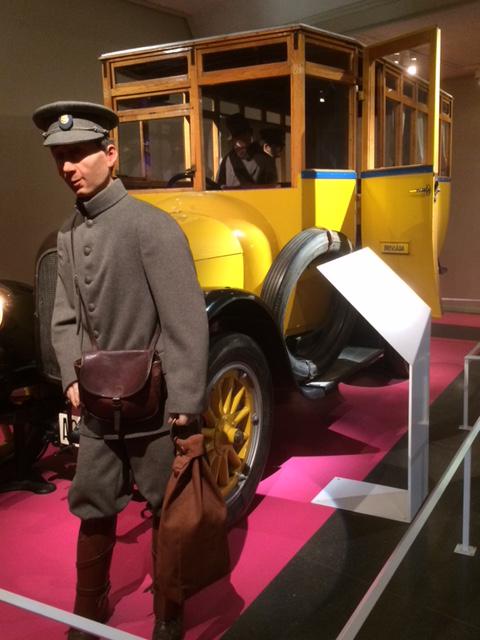
There was a whole room about the role played by the postal service in World War I, when mail — and prisoners of war — were transferred between nations through neutral Sweden. This exhibit focused on a town near the border of Finland, where the postal service carried some incredible load of letters, packages, and even people. This photo of a photo gives you some of the idea: 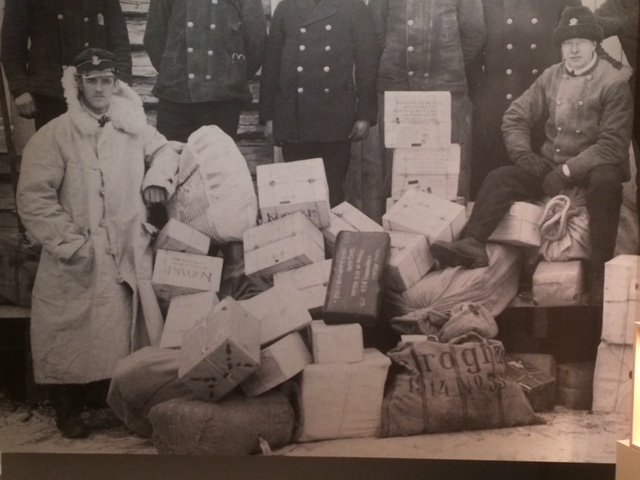
A particularly quirky detail is a small display of work by the Stockholm Embroidery Society
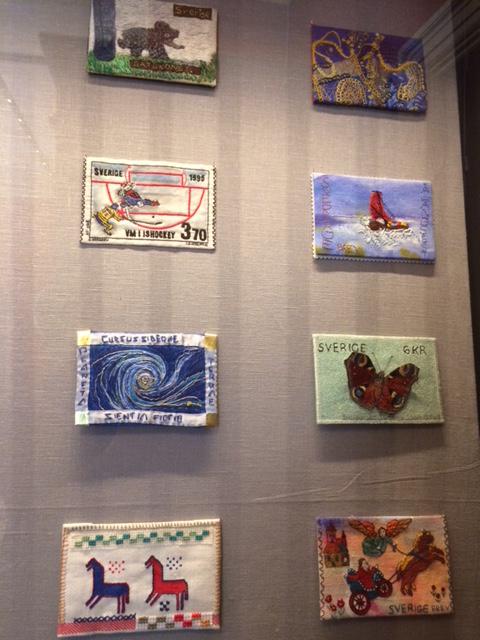 showing work inspired by Swedish postage stamps. Huh.
Finally, something that I did not like. In a room about communication, I saw an illustration of the Swedish finger-spelling alphabet. The hand shapes are ALL different from those used in the US (well, except for the letter i) and I must have been too surprised and unhappy to take a photo. In addition to learning two languages (that are written with the same alphabet), you have to learn all different shapes for the letters!? Bummer.
 The MHB Foghorn