Climbing the Dune
Friday 12 april 2019
As I understand it, the Orange River, between Namibia and South Africa, carries masses of iron oxide and other colorful materials to the Atlantic. Then the Benguela current, flowing up the coast from Antarctica, thrashes huge amounts of sand onto the coast to be carried by the wind. Over time, the sand accumulates into dunes. And over presumably a very very long time, the dunes migrate inland and become immense. In any case, Sossusvlei is an area of huge red dunes, and they are a big tourist attraction.
We left the camp in the dark, to reach the dunes before the crowds and before the mid-day heat. We stopped to see the sunrise.
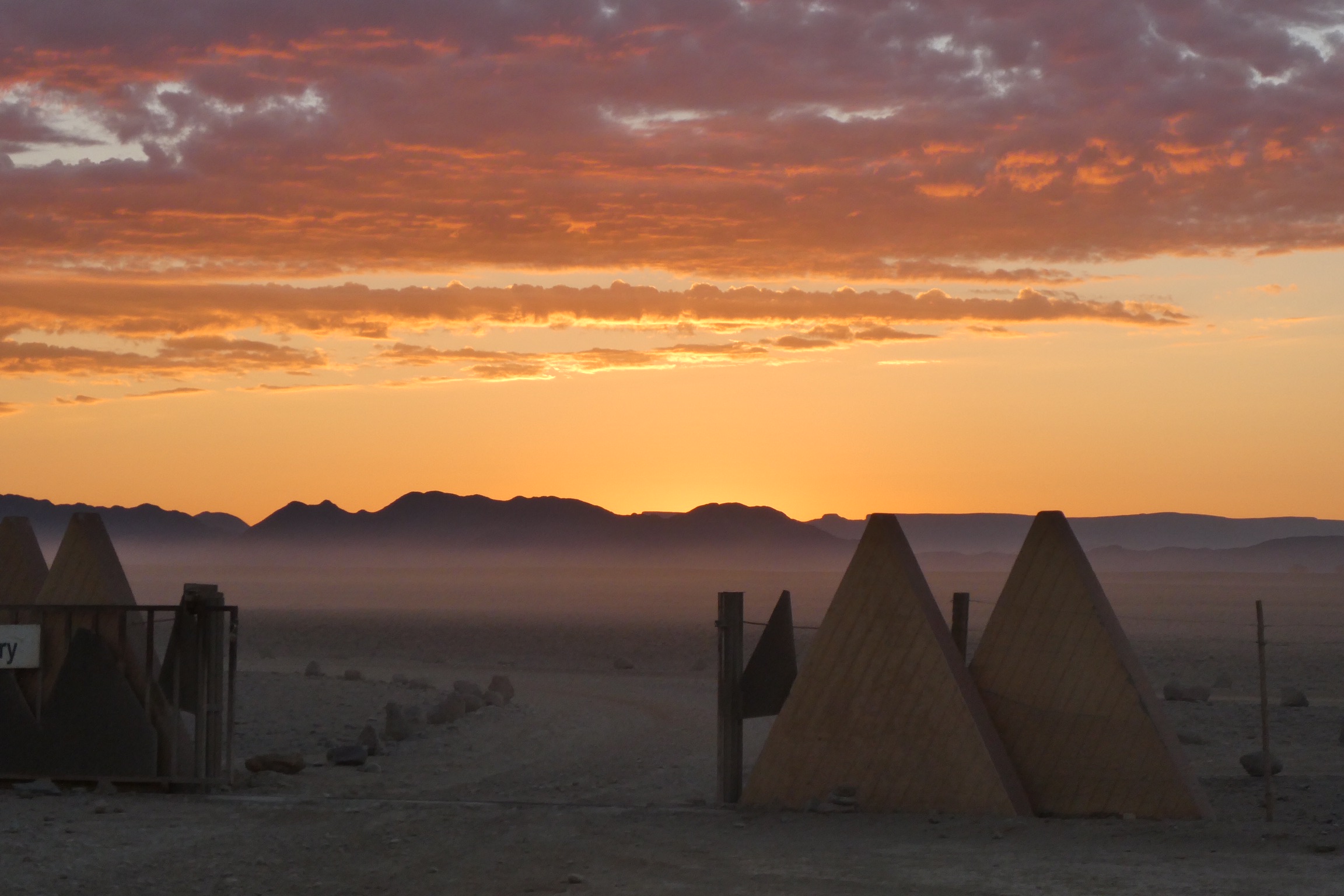
Then it was a 30- to 60-minute drive on a paved road to the parking lot beyond which there are really no roads, just sand. You really need a 4-wheel-drive car and a skilled driver. Soon enough you stop slewing around, park the Land Cruiser, and head for the event du jour: climbing the ridge of the dune known as Big Daddy.
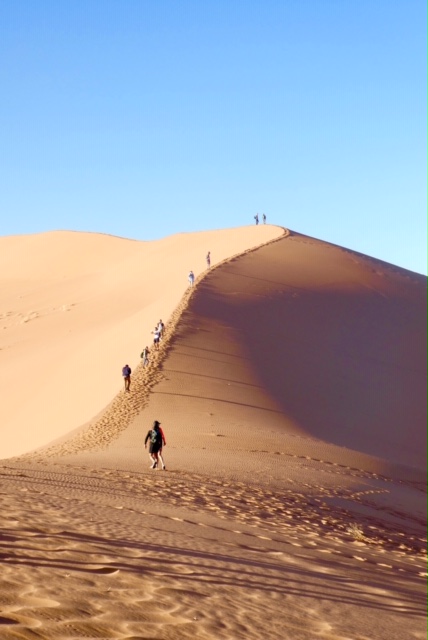
Here’s my mood shot of the trip so far: the two steep sides of the dune, one in already hot sun and the other in shade:
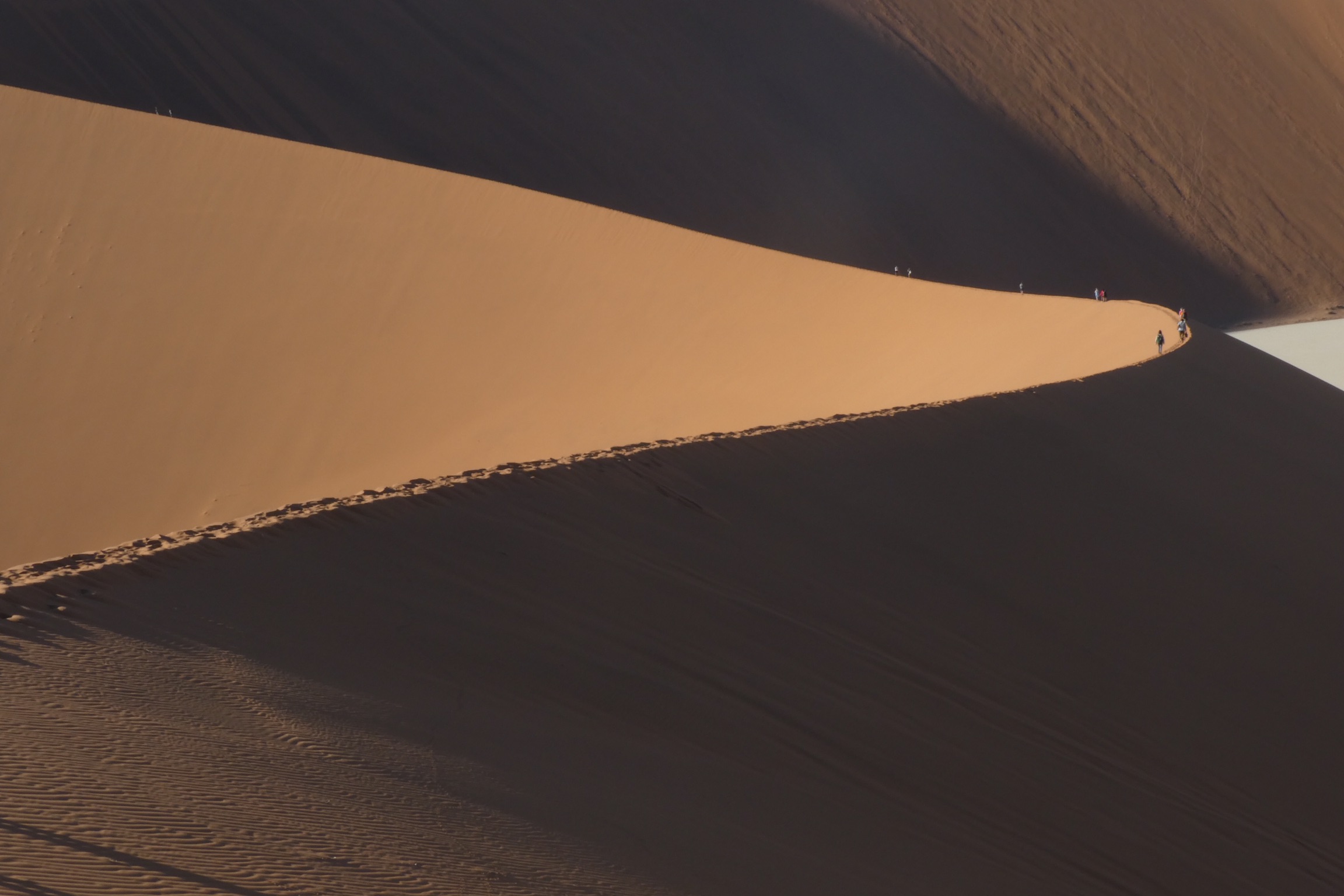
At a certain point, I had had enough of the uppity-up and was ready for the downity-down (terms I appropriated from a serious walker who knows who she is). I barrelled down, barefoot in the wonderfully cool sand, running (as everyone does) to the bottom of the dune. Hundreds of years ago, a river ran through the area, and there were many trees — I think acacias. Then the river changed course, and the land completely dried up, leaving a crust of limestone (or calcium?) and other minerals. (It looks a lot like elephant skin.) Because the climate is so intensely dry, the trees have not completely decomposed, and here they remain.
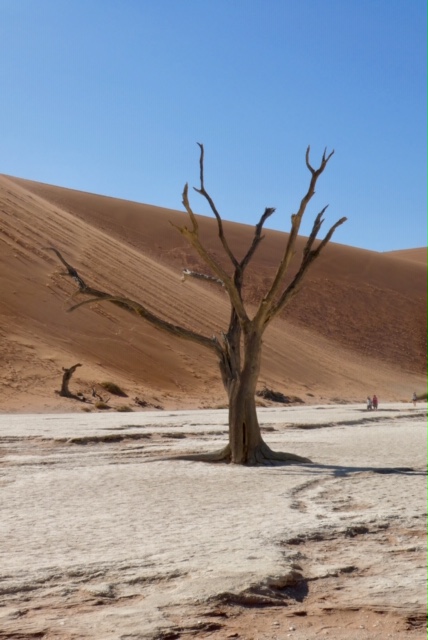
By the time we had climbed and descended the dune, then walked through Deadvlei (no kidding), it was hot and very bright. Time to return to the comfortable camp for a long nap.
 The MHB Foghorn