To Etosha via the Himba Village
Saturday 20 april
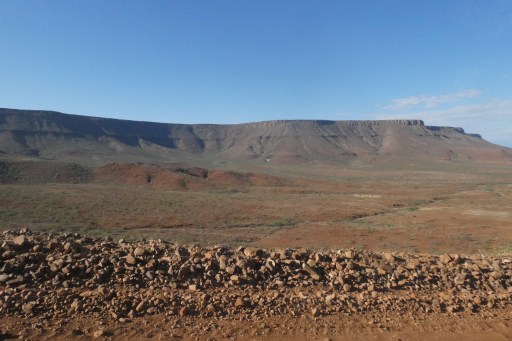
We bounced our way out of the Desert Rhino Camp and headed more or less northeast. The roads were much more comfortable after we got out of the red rocky basalt.
We visited the Himba Village, which is like Sturbridge or other re-created historic villages, except that real people really live there. The Himba men herd their cattle, and the women create jewelry out of every conceivable material, including discarded metal, bottle caps, plastic bags, etc. it is traditional for women to maintain unbelievably elaborate hairstyles as well.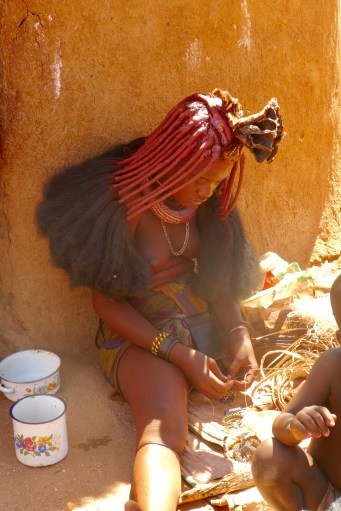
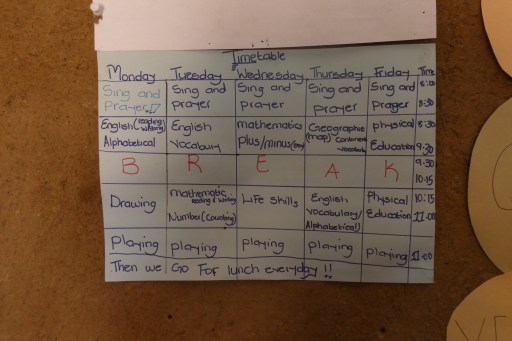
The Himba here welcome visitors (who pay a fee), and provide a knowledgeable guide. (Ours had excellent English, especially considering that he is self-taught.) It gives one pause to see an obviously commercial enterprise as a cultural artifact, but the money they make probably allows them to keep their traditions alive. And it was all very interesting. The kids were very engaging, and the tiny primary school was sparsely equipped but impressive.
We had lunch in Outjo, which has not only stop signs but a traffic signal. The Afrikaans and German heritage is obvious. More paved roads led to the entry to Etosha National Park, about 70 miles north of Outjo. A short distance farther took us to Okaukuejo, a large complex run by Namibia Wildlife Resorts, a government agency whose tourism services we had seen earlier. We were among many many visitors in various levels of lodgings, including tent grounds. We have “Waterhole Chalets,” so named because they are right by the large artificial waterhole, where animals come at night to drink.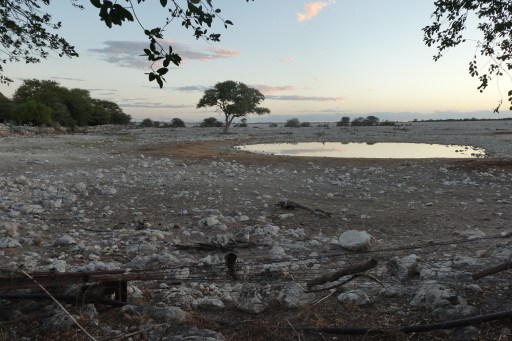
Between about 8:30 and10:00 pm I saw three rhinos, three giraffes, a jackal, and a fox at different times near the waterhole. Various birds flew around. The animals are obviously accustomed to the floodlights as well as the smell and quiet sounds of the people who gather for the slow and unpredictable show.
 The MHB Foghorn