Wednesday, 2 october 2024
Everyone knows about Easter Island: “That’s where those huge stone heads are, right?” Yes, but (a) it’s only been called “Easter Island” for a small fraction of the time that it’s been inhabited, (b) there are many more of those stone figures than the 15 in the photos that everyone has seen. I won’t even try to sketch the history of the island or the theories of how its population came very close to extinction, but it’s all very interesting and somewhat mysterious — worth learning more.
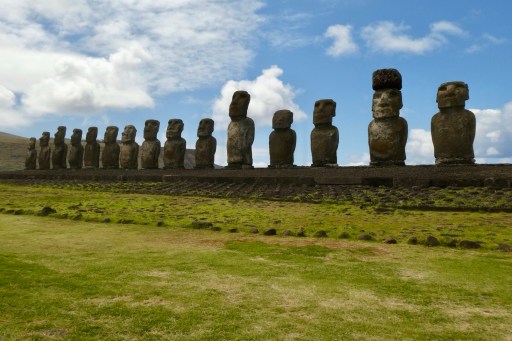
It’s called Easter Island because the first European known to arrive here came on Easter Sunday in 1722. The island’s real name is Rapa Nui; the people of that name came from somewhere in Polynesia 900-1200 years earlier than the Europeans. (It’s really remote, a five-hour flight from Santiago.) The island was created by the eruption of three volcanoes, and the volcanic rock is visible all over.
The stone figures are called moai, and they were carved, transported, and erected between about 800 and 1500. The famous ones weigh about 30 tons each, and stand about 18-20 feet tall.
Here is the quarry from which all the moai were carved out of the rock.

You can see the bare rock up above; that’s where they began each carving. Eventually they (carefully?) allowed the statue to topple forward, then stood it up so that the back side could be completed.
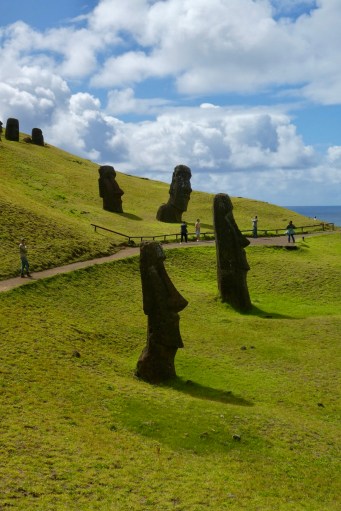
There are lots of moai here in the quarry. Those that are standing up are complete, looking more or less like the 15 famous ones by the ocean.
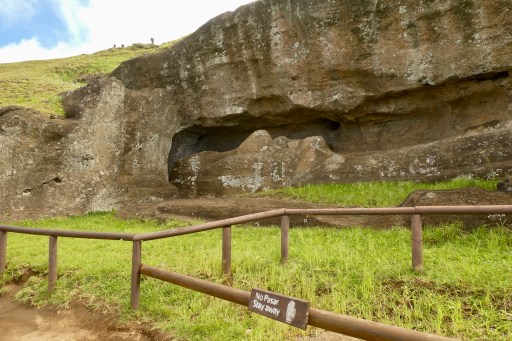
This (incomplete) one was unusual in that it was being carved horizontally. You can really get a sense of how they carved into the rock to create these huge things.
Scholars don’t really know how the moai were transported from the quarry to other parts of the island. The Rapa Nui people had no wheels (other than tree trunks that might have been used as rollers); they also had no animals other than chickens (not known as rivals to oxen), and no fibers that would make good ropes.
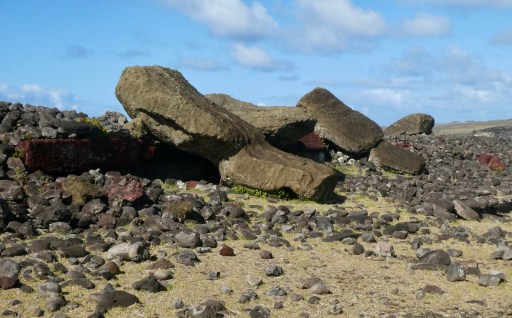
Another mystery: At some point, all the moai were intentionally knocked over, maybe because of social collapse among the Rapa Nui clans. Here’s one that broke in the middle; some of the famous 15 broke at the more obviously fragile neck. Nobody really knows why the moai were destroyed in this way.
An earthquake in 1960, centered off the coast of Chile, created a tsunami that lifted the famous moai 90 meters inland from where they lay. They were replaced (and some of their heads recemented on their necks) between 1992 and 1996, thanks to support from a Japanese company.
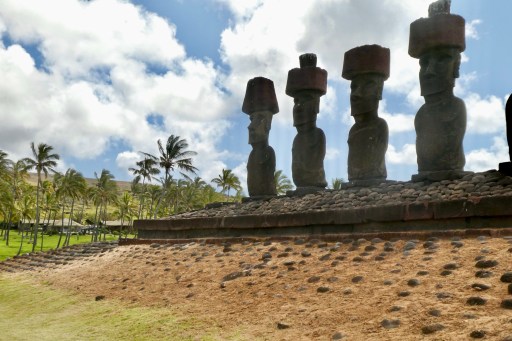
There is only one sand beach on the island. The moai that are here now were resurrected after being covered by sand for a few hundred years.
 The MHB Foghorn